Guide · updated 2026-10-12
How Long Should You Stay in a Cold Plunge?
How long should you stay in a cold plunge? Typical time ranges for beginners and regulars, why longer isn’t better, and the signs it’s time to get out.
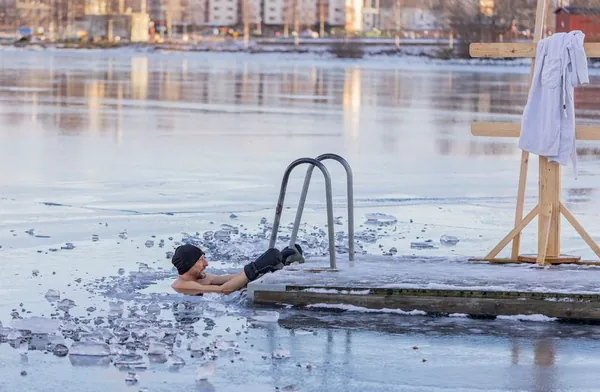
"How long should I stay in?" is the most common question in cold plunging — and the honest answer is less than most people expect. Duration matters far less than temperature, consistency, and staying safe. Here is how to think about timing at every experience level.
Safety note: Cold immersion stresses the cardiovascular system. If you have a heart condition, high or low blood pressure, or are pregnant, talk to your doctor first.
The short answer
For most people, 1 to 3 minutes per plunge is the typical range. Beginners should start at 30–60 seconds. Sessions longer than about 3–5 minutes offer little additional upside for most people while adding discomfort and risk. If you take one idea from this guide: colder and longer is not a competition, and treating it like one is how people get hurt.
Timing by experience level
Beginners: 30–60 seconds
Your first several plunges should be short. The goal is learning to stay calm — controlling your breathing through the initial cold shock — not enduring maximum time. A composed 45 seconds teaches your nervous system more than a panicked three minutes. Stay at this range until short plunges feel manageable rather than overwhelming.
Developing regulars: 1–2 minutes
Once the initial shock response feels familiar, most people naturally extend toward the 1–2 minute range. This is where the majority of regular plungers settle long-term. It is enough time to feel fully immersed in the experience without pushing into the territory where shivering becomes intense.
Experienced: 2–3 minutes
Experienced plungers at colder temperatures (under 50°F) typically stay 2–3 minutes. Beyond about 3 minutes, most people report diminishing returns — the experience stops changing and just gets harder. There is no widely agreed "optimal" duration backed by strong evidence, so treat any precise prescription you see online with skepticism.
Why longer isn't better
- The cold shock response peaks early. The gasp reflex and heart rate spike happen in the first minute. Staying in longer does not repeat that adaptation.
- Risk rises with time. Prolonged immersion increases the chance of intense shivering, numbness, dizziness, and in extreme cases hypothermia — especially in very cold water.
- Consistency beats duration. Someone who plunges for 90 seconds three times a week, for months, gets far more out of the practice than someone who does one heroic ten-minute session and quits.
Signs it's time to get out
Exit the water if you notice any of the following — in any order, at any time:
- Dizziness, lightheadedness, or nausea
- Numbness that feels wrong, or loss of coordination
- Intense, uncontrollable shivering
- Difficulty thinking clearly or controlling your breathing
- Anything that simply feels "off" — trust the signal
Getting out early is always the right call. You can plunge again tomorrow.
What changes your ideal time
- Water temperature. Colder water means shorter stays. Two minutes at 55°F is a different experience from two minutes at 40°F. Adjust time and temperature together — when one goes more extreme, keep the other milder. See our temperature guide.
- Experience. Regulars tolerate longer stays because their response is trained, not because their bodies are fundamentally different.
- Body composition and size. Larger bodies cool more slowly; smaller bodies cool faster. There is no formula — pay attention to your own signals.
- Air temperature and wind. Getting out into freezing wind after a plunge cools you further; factor the environment into your total exposure.
- How you feel that day. Tired, hungry, dehydrated, or stressed? Go shorter and warmer. The plunge will still be there tomorrow.
A sensible progression
If you want a rough template: weeks 1–2 at 30–60 seconds in 55–60°F water; weeks 3–4 at 1–2 minutes as comfort allows; beyond that, 2–3 minutes at whatever temperature feels challenging but controlled. There is no need to progress past the point where you feel good doing it.
How often should you plunge?
Many regulars plunge two to four times per week; some go daily. Daily plunging in very cold water can be a lot — if you go daily, consider keeping sessions shorter or slightly warmer. As with duration, there is no evidence-backed "perfect" frequency. Start with twice a week and adjust based on how you feel and recover.
Timing within a contrast session
If you are alternating heat and cold, the plunge is one segment of a cycle, not the main event. A typical studio cycle runs 10–20 minutes of sauna, 1–3 minutes of plunge, and 5–10 minutes of rest — repeated two or three times. Notice the proportions: the cold is the shortest phase by far. Beginners sometimes fixate on plunge duration while ignoring the rest periods, but the rest is doing real work — letting your body stabilize before the next round. If you are short on time, cut a cycle, not the rest periods. And the standard sequencing guidance applies: start with heat, and many protocols end with either a final cold dip or a rewarming rest — follow your studio's recommended sequence rather than improvising.
The content in this guide is for informational purposes only and is not medical advice. Cold plunge studios vary in how they operate, and prices and availability change often — confirm details with the studio before you book. Read our full disclaimer.